The Story
Succession, Capital & Continuity
At Geneva Watch Days, some of the most interesting conversations begin before the exhibition floor is fully awake.
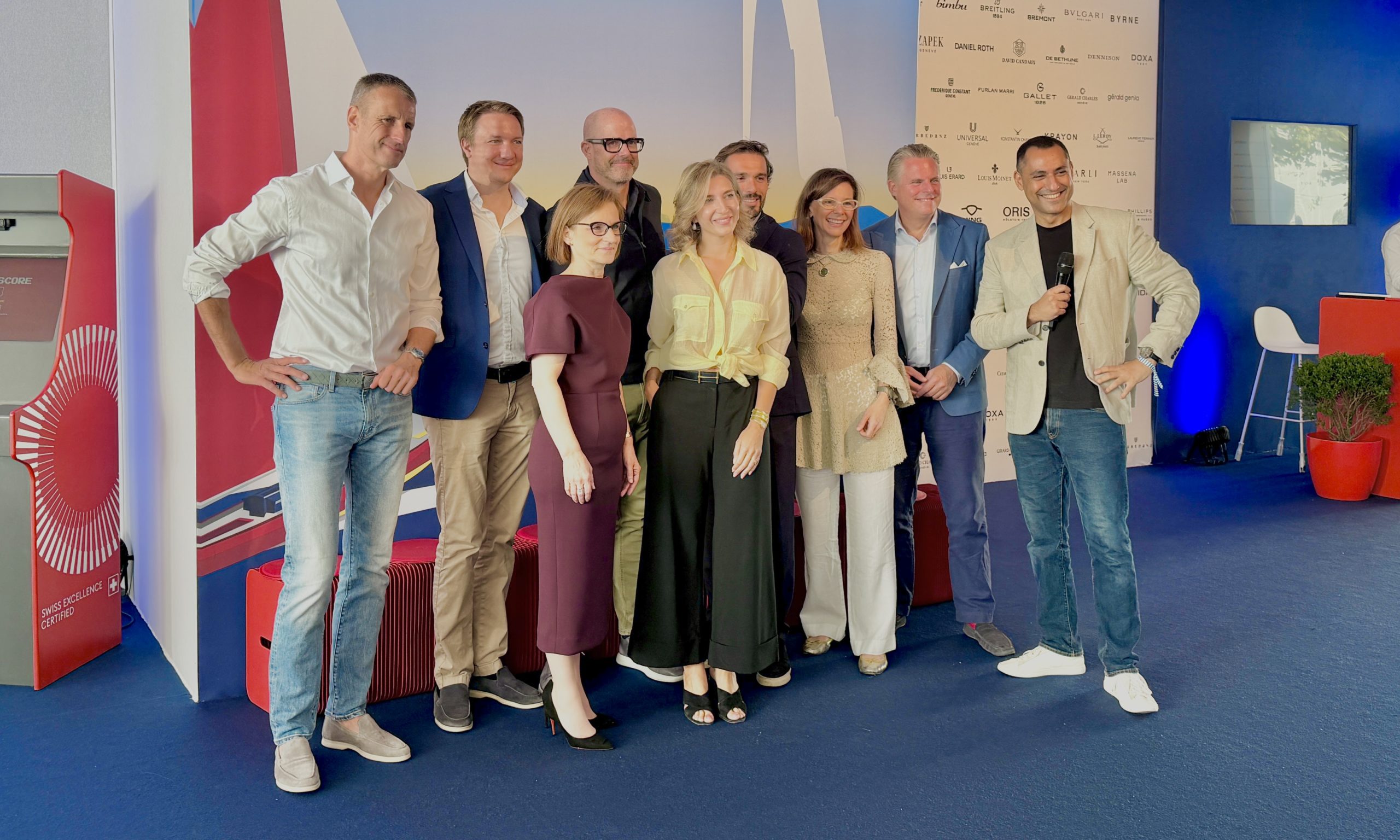
From 8:30 to 9:30 on Saturday morning, the Pavilion hosted an invitation-only Power Breakfast with CEOs, presented around the theme Succession, Capital & Continuity. The format brought together business leaders around small tables to discuss one of the most delicate questions facing independent and family-owned companies: how to preserve what made a business distinctive while allowing the next generation to take responsibility for its future.
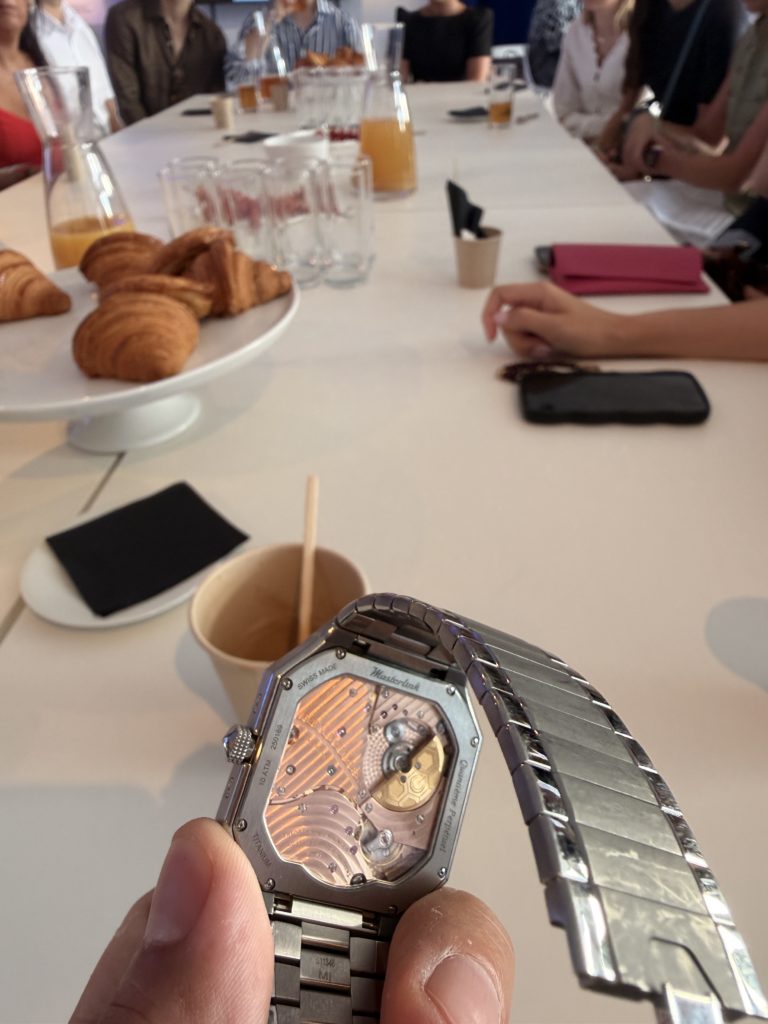
Among the participants were Federico Ziviani, CEO of Gerald Charles, and Martine Stoffel-Castérot of Chocolaterie Daniel Stoffel, the family-owned Alsatian chocolate house. Their companies operate in very different worlds, yet both are shaped by questions of heritage, craftsmanship and transmission.
Daniel Stoffel describes itself as a family chocolaterie in Alsace, with a history dating to 1963 and knowledge passed between generations. Its production remains centred on artisanal chocolate-making, careful ingredients and specialist savoir-faire developed in its Alsatian workshops.
Gerald Charles presents a particularly powerful example of succession because its history begins with one of watchmaking’s defining designers.
Gérald Charles Genta founded the Maison in 2000, naming it after his first two names. By then, Genta — often referred to as the Maestro — had already created designs including the Audemars Piguet Royal Oak and the Patek Philippe Nautilus. In 2003, he entrusted Gerald Charles to the Ziviani family, with whom he had a long-standing relationship, while continuing as Chief Designer until 2011.
Today, the company remains family-owned. Federico Ziviani joined the Maison in 2019 and is now its CEO, carrying the business into another generation while working with a design heritage that still draws on Genta’s original archive.
That history makes the central question of the breakfast particularly relevant: how can a Maison remain faithful to a founder’s vision while giving the next generation the responsibility to carry it forward with relevance and precision?
For a traditional craft such as chocolate-making, continuity can be strongly connected to the transmission of specific techniques, recipes and production knowledge. For a contemporary watch company, the situation is more complex. A Maison depends not only on watchmaking and engineering, but also on communications, logistics, marketing, distribution, suppliers and commercial strategy.
In that context, succession is not about one person embodying every discipline alone. It becomes a matter of judgment: knowing which values must remain untouched, where specialist knowledge should be entrusted to the right people, and which partnerships can help the company evolve with coherence.
That may involve a supplier whose technical capabilities strengthen the product, a distributor whose network opens a relevant market, or even a partnership with a major figure from sport or culture. The important question is not visibility alone, but whether both sides share a sufficiently coherent vision to build something credible over time.
Across very different industries, one principle remained consistent: succession is not simply ownership changing hands. It is the transfer of standards, responsibility and trust.
My Editorial Experience
Coffee, Croissants and the Question of What Comes Next
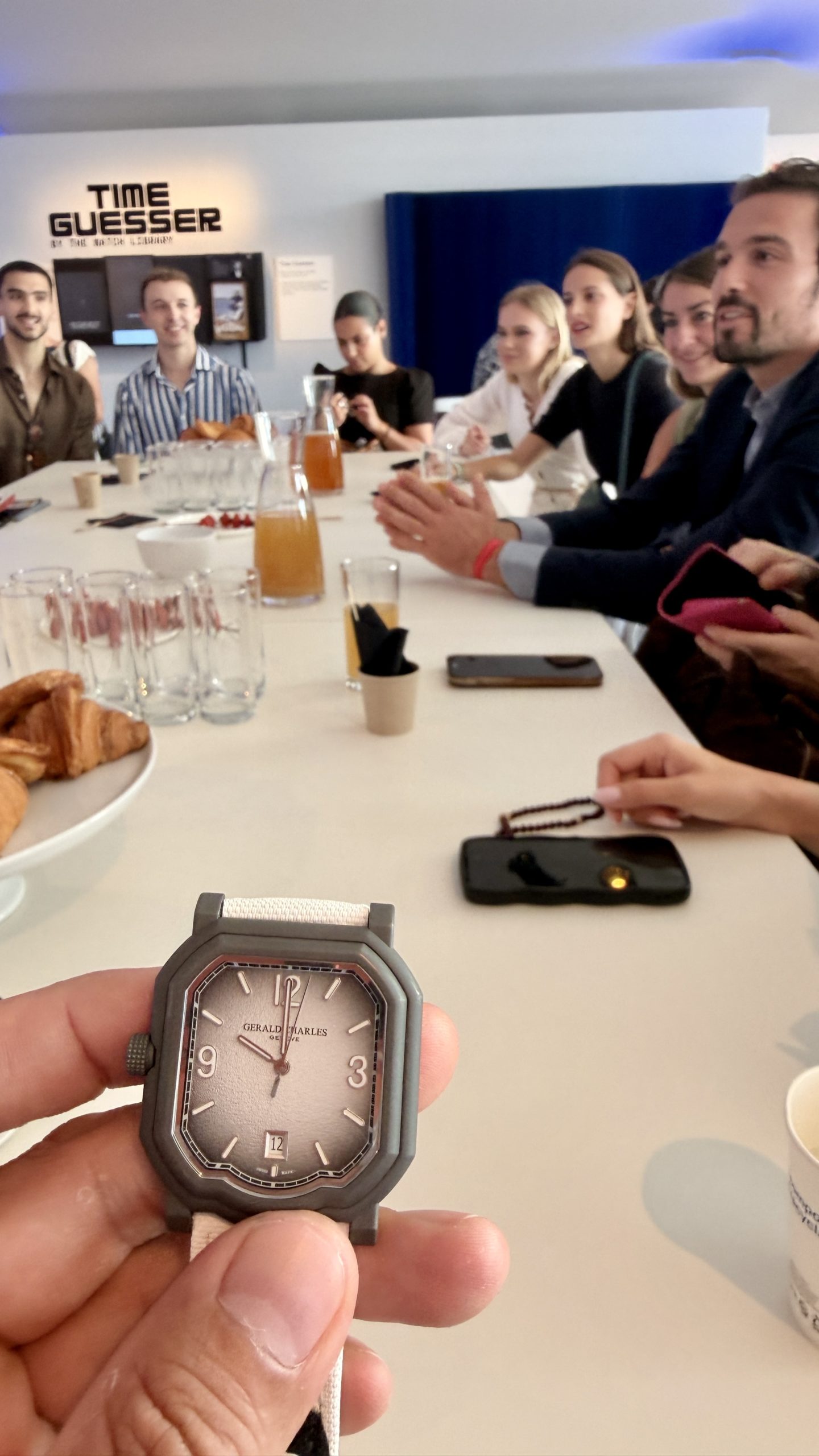
There is something rather pleasant about starting the day with a question as serious as corporate succession while holding a coffee and a croissant.
Our table was French-speaking, and I found myself in conversation with Federico Ziviani of Gerald Charles and Martine Stoffel-Castérot of Chocolaterie Daniel Stoffel, alongside participants from very different professional backgrounds.
The discussion quickly became broader than watchmaking.
What exactly should one generation transmit to the next?
With an artisanal activity such as chocolate-making, knowledge can be remarkably vertical. There is a craft to learn, techniques to master and specialist knowledge that can be transmitted through training and experience. The discussion repeatedly returned to the broader question of continuity: how a company can preserve its identity while preparing for the next generation.
Watchmaking creates a different challenge.
A modern watch company involves an extraordinary variety of professions. There are designers and watchmakers, but also engineers, logistics specialists, communications teams, salespeople, marketers, retailers and external suppliers. A successor can therefore bring a particular strength without needing to become an expert in every discipline involved in making the company function.
That makes partnerships particularly important.
If a Maison considers a partnership beyond the traditional watchmaking world, the real question is not simply visibility. The company has to understand whether there is a shared vision capable of sustaining a meaningful relationship over several years.
The same applies to suppliers and distribution. A technically strong partner can improve what happens inside the product; the right distributor can open access to a market in a way that benefits both sides.
But whatever changes, some things remain central.
Excellence, service, respect for the client and close attention to quality remain important when one generation gives way to another. Those values are part of what people ultimately trust.
Gerald Charles adds another layer to that discussion because it begins with an unusually rich artistic inheritance. Gérald Genta left behind not simply a company name but a visual language and an archive of designs.
When your starting point is the work of the Maestro, the next generation already possesses something extraordinarily valuable.
The challenge is knowing how to preserve it without turning it into a museum.
And perhaps that was the most interesting idea to come out of the morning: continuity does not necessarily mean standing still.
It was also, admittedly, an early start. Those of us who made it to the Pavilion for 8:30 were duly congratulated for our morning discipline.
But sitting around a table with business leaders, listening to different approaches to questions that determine the future of family companies, made the alarm clock worthwhile.
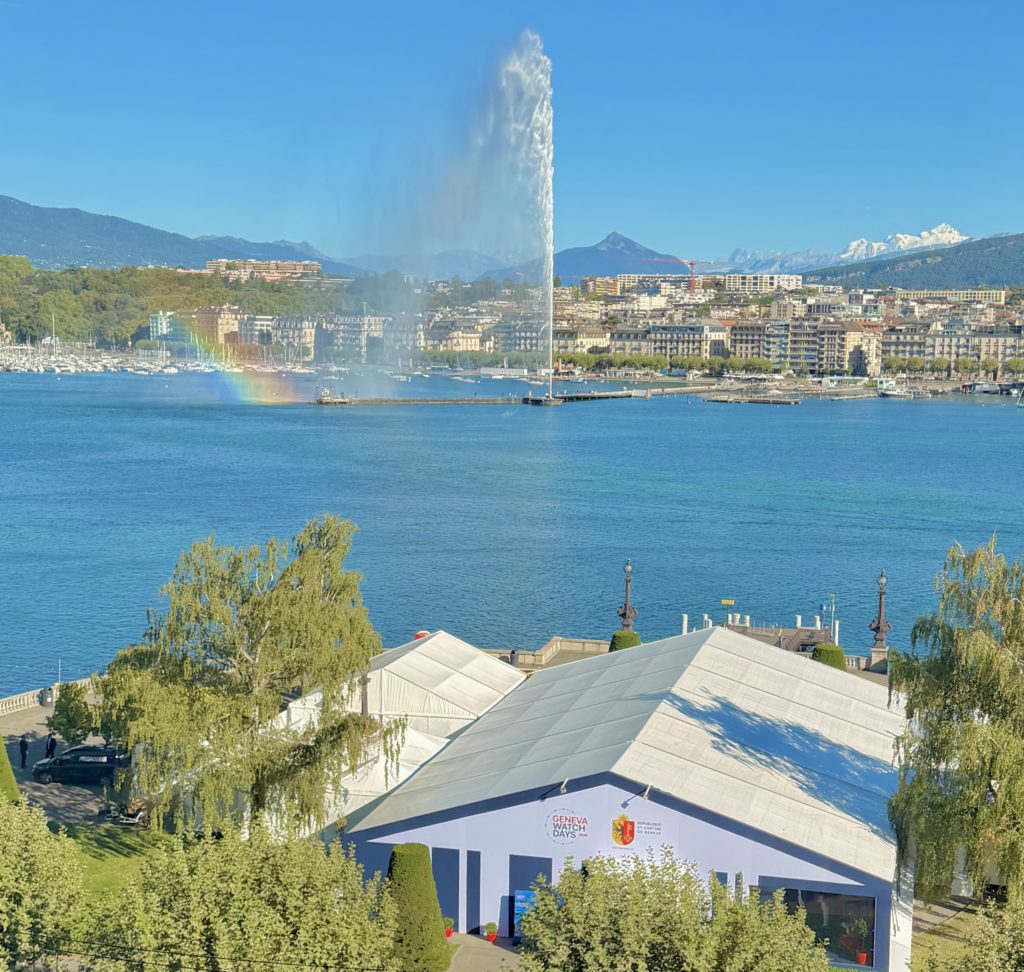
And outside, Geneva was offering one of those mornings when the Jet d’Eau looked particularly good.
A coffee, a good croissant and a conversation about what one generation owes the next.
Not a bad way to begin the final day of Geneva Watch Days.
Later comes the closing evening. Before that, a few more visits around the Pavilion.
Palomino Gallery